Melasma: Why Microneedling Might Beat Cosmelan and Dermamelan Peel
Cosmelan has long been one of the most popular depigmenting treatments on the market, but it's also one of the most expensive. The same company later released an even "stronger" version, Dermamelan, which some of my friends and clients personally tried, and while the results were worth it, they were pretty exhausted by the never-ending peeling that came with it.
I've personally worked with Cosmelan throughout my career, several times, and seen genuinely amazing, immediate results. But most of the clients who achieved permanent pigmentation removal weren't actually dealing with melasma, they were dealing with sun damage or PIH (post-inflammatory hyperpigmentation).
And what about the clients with melasma?
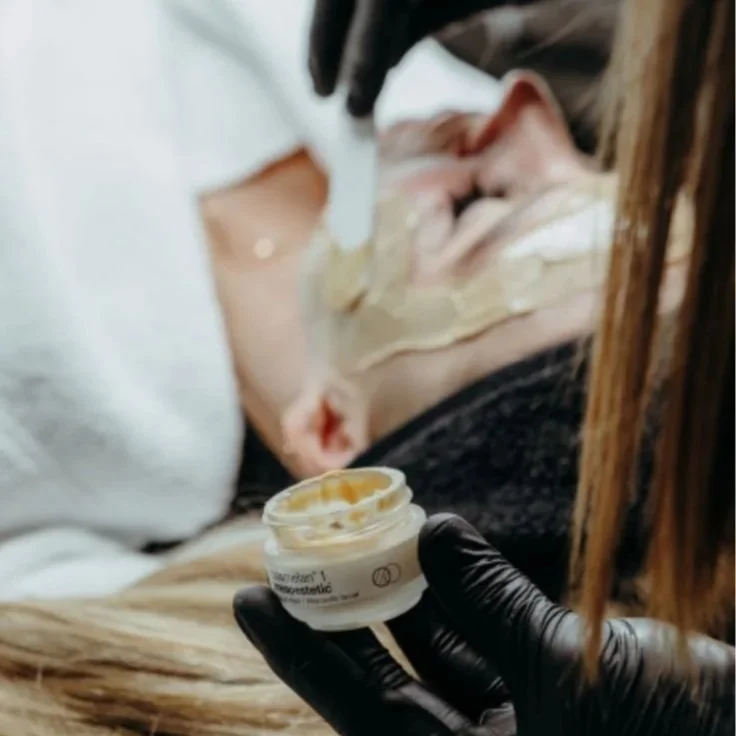
They had the classic heavy peeling too, shedding like a snake and revealing brand new skin after a couple of weeks, with just a light pink shadow left where the melasma used to be, looking much brighter and far less visible. But around three months post-Cosmelan, I started receiving messages from these same clients reporting a slightly darker pigment returning in that same area. And after a couple more weeks, often coinciding with warmer temperatures, the melasma would slowly start creeping back. Why is that?
Melasma, unfortunately, is a chronic pigmentation condition that can't be fully removed the way normal sun damage can. So, what actually triggers melasma? Heat, trauma, hormones, and inflammation from certain products can all make it worse. With that in mind, Cosmelan is a very strong peel, one that doesn't just lift pigmentation and shed a layer of skin, but also weakens the skin barrier and creates inflammation in the process. So yes, it does remove the melasma immediately after treatment, but the chances of it returning are very high, partly because of the condition the skin is left in afterwards.
On the other hand, several clinical studies have demonstrated that microneedling alone can lead to visible improvement in melasma. One study, published in the Journal of Cosmetic Dermatology, showed a 46.9% improvement in pigmentation after six biweekly microneedling sessions, without the use of additional topicals. Other studies reported improvements ranging from 13.8% to 22.5% in melasma over the course of three months, using microneedling monthly as a standalone treatment. I know these numbers aren't massive, but considering that microneedling also improves skin texture and firmness, strengthens the skin barrier, and increases collagen and elastin production, all while treating the melasma at the same time, it really is a win-win. Over time, with the right stimulation, such as skin remodelling, anti-inflammatory signalling, and improved lymphatic flow, melanophages (responsible for the formation of melasma) can gradually break down and release the trapped pigment.
So, after covering all of this, as a skin expert, I always prefer the concept of "do less, do better," rather than jumping straight into one strong treatment to fix the issue. Aggressive treatments often backfire with melasma, pushing too hard and re-triggering that whole cycle where melanophages simply hold onto the pigmentation instead of releasing it.
Of course, this is my personal opinion regarding Cosmelan, and it's also the main reason why I chose not to offer it as a treatment at ReSKN. Don't get me wrong, this isn't an article written against the treatment, because as a depigmenting treatment for sun damage or hyperpigmentation, it's genuinely great, especially if you've got a big event coming up, like a wedding, where you want to prep the skin in advance and wear as little makeup as possible.
But if this treatment is being sold as a way to remove melasma, then unfortunately, I strongly disagree. Melasma can be kept under control, but there's no treatment that will make it fully disappear for good. To my clients, I personally recommend looking at their lifestyle: staying away from UV exposure (the biggest contributor to melasma), keeping the skin's temperature down by avoiding saunas or very hot showers, using cooling methods like dipping the face into a bowl of ice water when needed, and following a prescribed skincare routine containing tyrosinase inhibitors, antioxidants, and retinoids.
Dealing with melasma is never fun, and Cosmelan can be a useful initial treatment for very severe cases, helping to clear the bulk of the pigmentation. But clients need to be informed that it may return sooner rather than later after treatment, and that it can then be managed from around three months post-Cosmelan with monthly skin needling.
At the end of the day, your skin doesn't need a fight. It needs consistency, patience, and the right kind of stimulation, not another aggressive treatment pushing it past its limits.
Note: this article is based on my professional experience and opinion as a dermal therapist. It's general information, not a personalised recommendation.
